1905
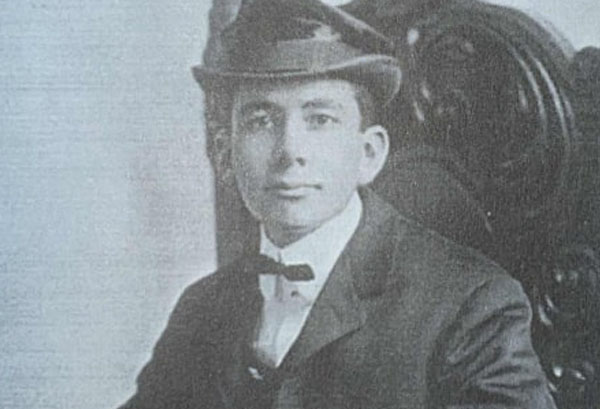
Edward Soule, a graduate of UC Berkeley, begins work as an engineer for John B Leonard in San Francisco.
1906
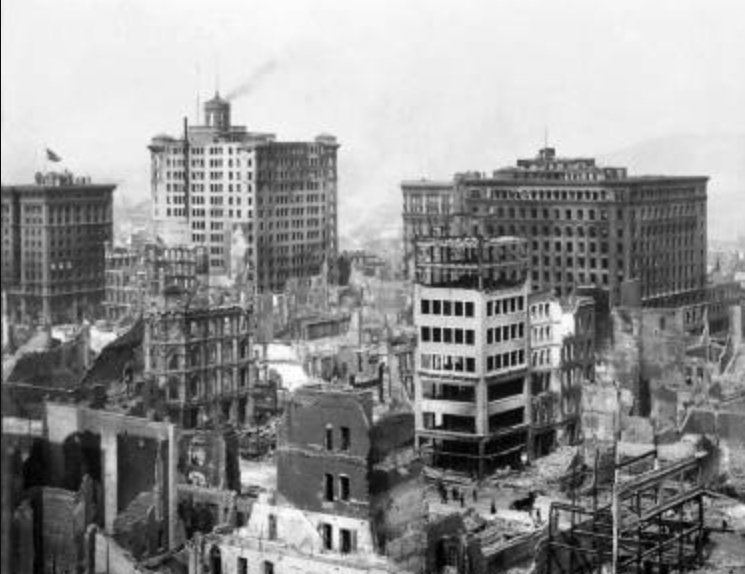
Edward Soule witnesses the devastation of the San Francisco earthquake, largely due to the vulnerabilities of the city's unreinforced masonry and wood-frame buildings. Working under John B. Leonard, Soule learns the importance of steel reinforcement in providing tensile strength to concrete and gains hands-on experience supervising the placement of reinforcing steel (rebar).
1907
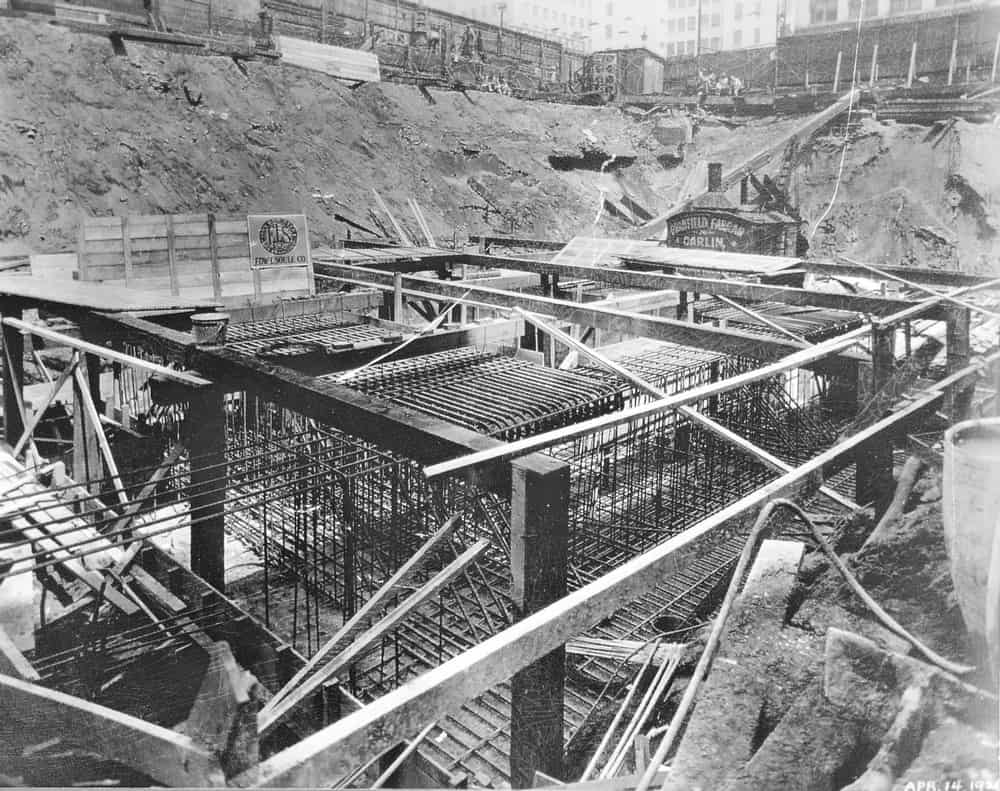
Edward Soule begins taking on independent projects, laying the foundation for the Edward L. Soule Company. Operating from a small office between 3rd and 4th Streets with two assistants, he secures his first contract with the Pacific Coast Syrup Company and earns nearly $16,000 in his first year of business.
1908
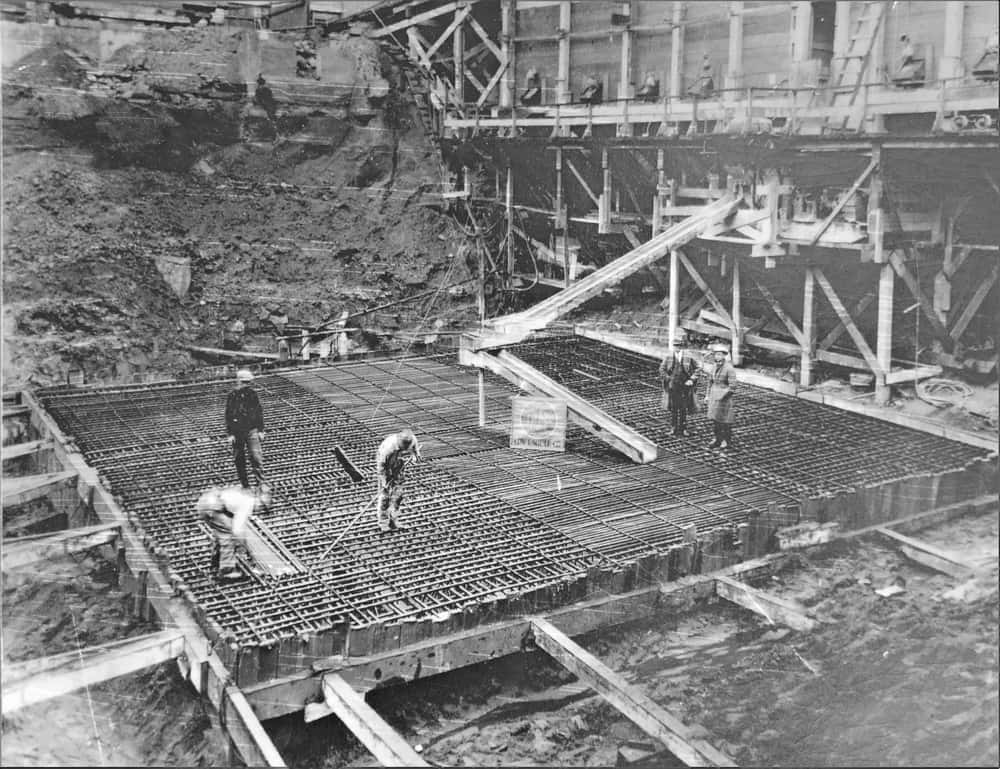
The Edward L. Soule Company is officially established. After gaining recognition for its reinforcing steel placement work, the company acquires secondhand equipment to begin fabricating its own rebar. By providing both fabrication and field placement under a single contract, it becomes one of the first firms in the United States to offer a fully integrated reinforcing steel service.
1920
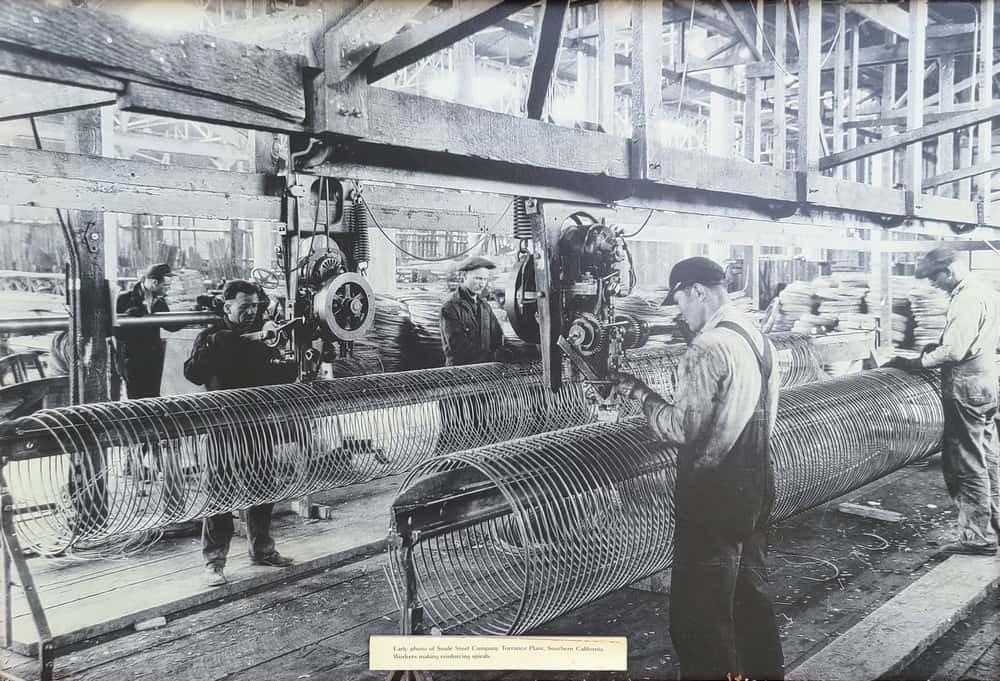
Growing demand during World War I drives the Edward L. Soule Company to expand into the international steel market. As export orders increase, the company begins to add dedicated export managers and sales personnel. By 1920, annual steel sales exceed $1 million, primarily through exports to Asia.
1923
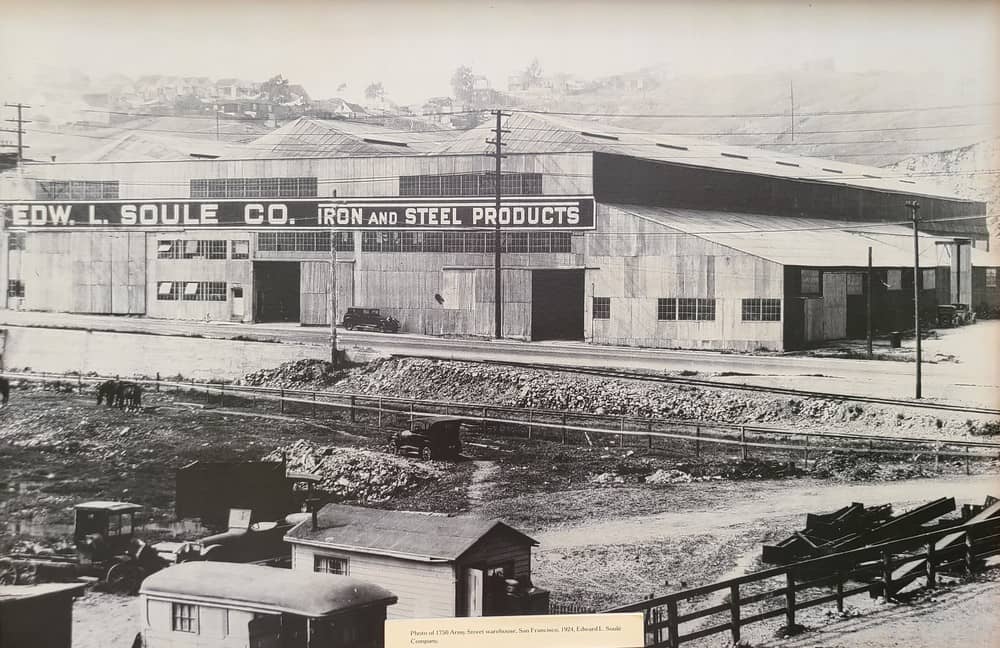
The Edward L. Soule Company purchases the American System of Reinforcing, establishing its presence in Southern California and beginning a regional legacy that would span more than 90 years. To support continued growth, the company also relocates its San Francisco operations to a larger facility at 1750 Army Street.
1927
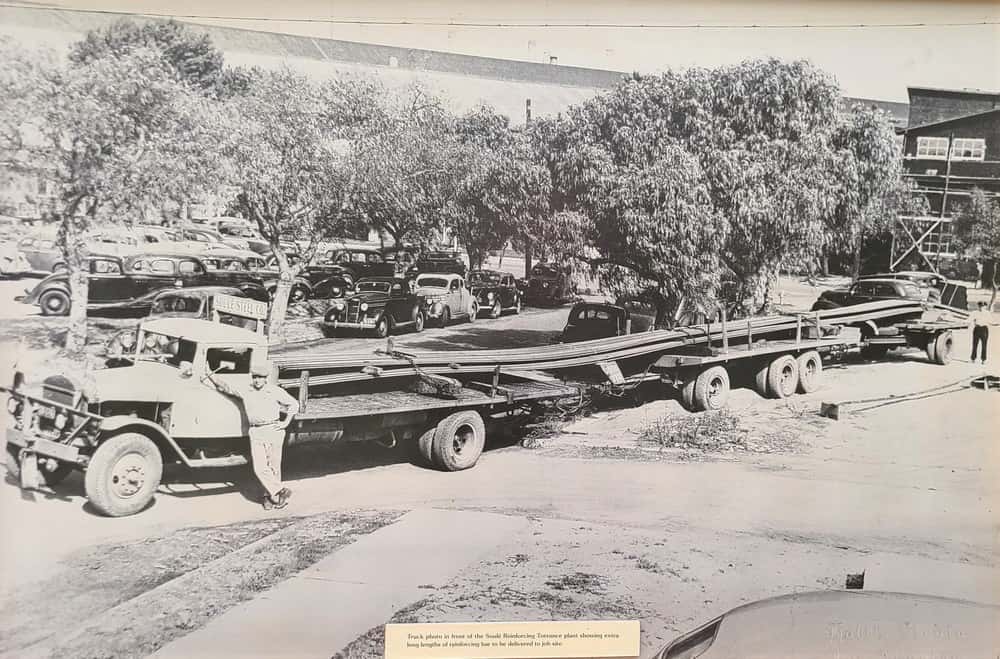
Soule Steel Company is formed through the merger of the Edward L. Soule Company, the American System of Reinforcing, and the Concrete Engineering Company of California. The same year, Edward Soule acquires a controlling interest in the Concrete Engineering Company of Omaha, expanding the company's reach beyond the West Coast.
1930s
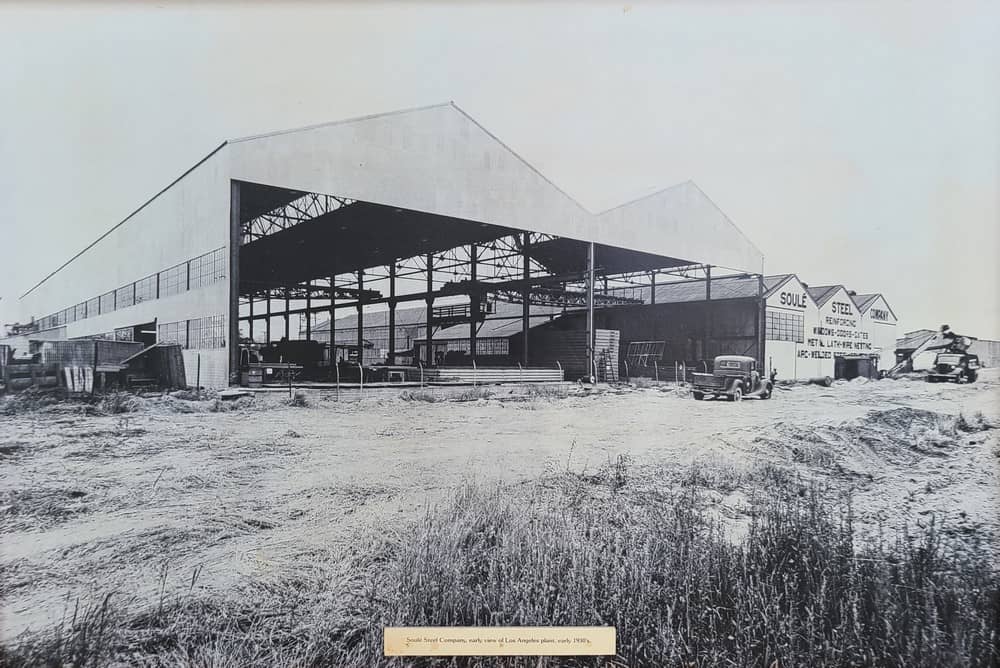
Soule Steel expands into the Pacific Northwest with a new office and plant in Portland, Oregon, cementing its position as a major West Coast steel supplier. During the Great Depression, Edward Soule promotes innovative new uses for steel by unveiling his all-steel house at the 1939 World's Fair in San Francisco.
1940s
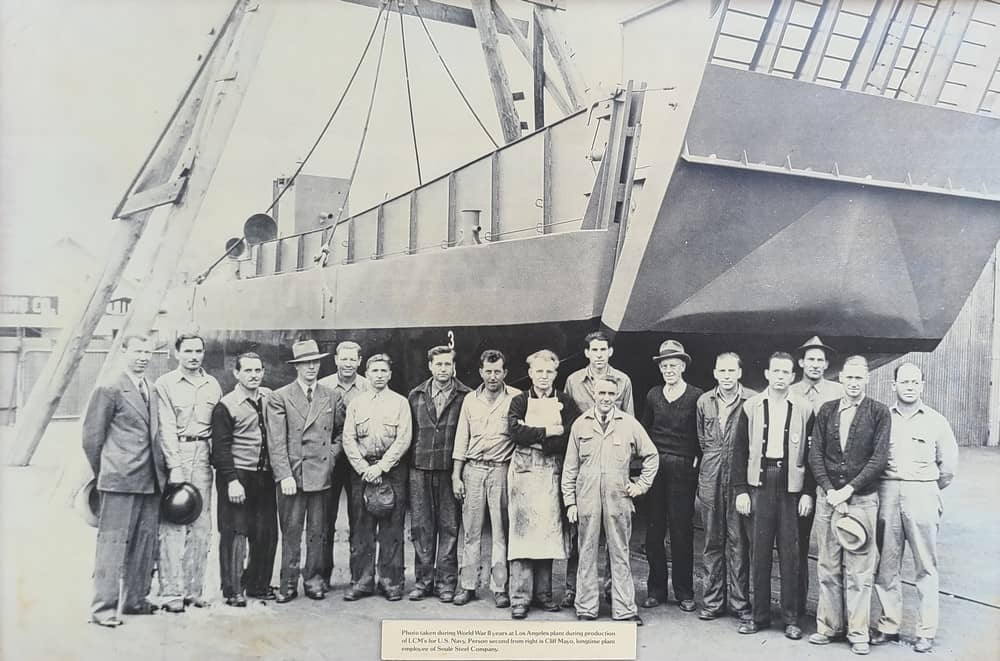
Soule Steel joins the war effort as a manufacturer of U.S. Navy Landing Craft Mechanized (LCMs). Operations at its Los Angeles, San Francisco, and Portland plants quickly expand, growing the workforce to more than 1,200 employees.
1943
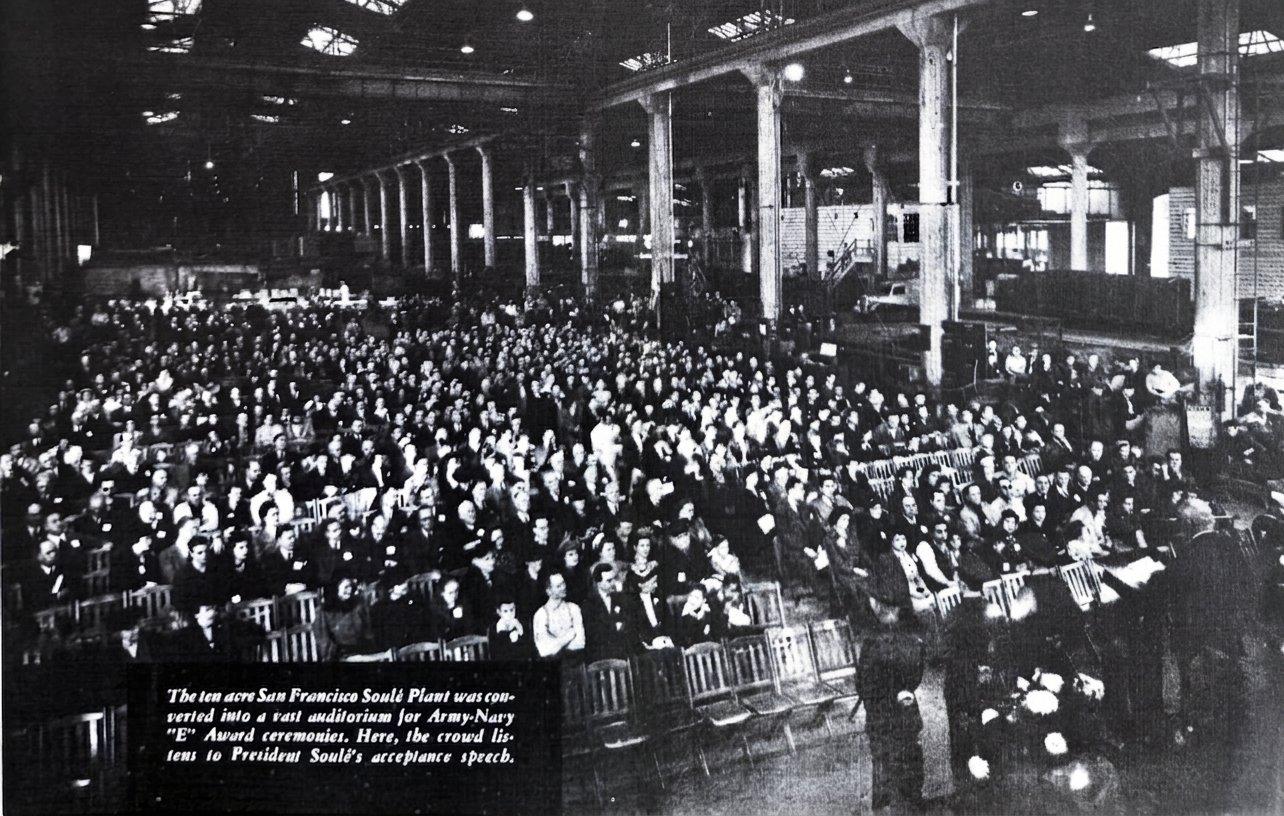
The San Francisco plant receives the Army-Navy E Award for excellence in war production on October 22, 1943, with the Los Angeles plant earning its own the following April. The Navy's Bureau of Ships judges Soule's landing craft outstanding above all builders of the same product.
1959
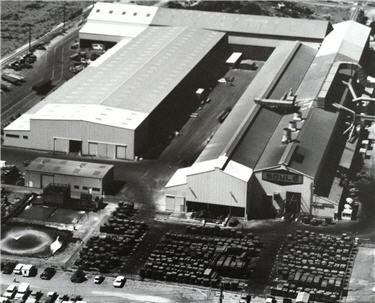
On July 20, 1959, Edward Soule's 1911 dream becomes reality as the first reinforcing bar rolls off the company's new mini-mill in Carson, California. Powered by electric arc furnaces and fed entirely by recycled scrap steel, the mill converts discarded automobiles and industrial metal into new reinforcing bars. This establishes Soule as a fully integrated reinforcing steel company, combining steel production, fabrication, and field placement under one organization.
1960s
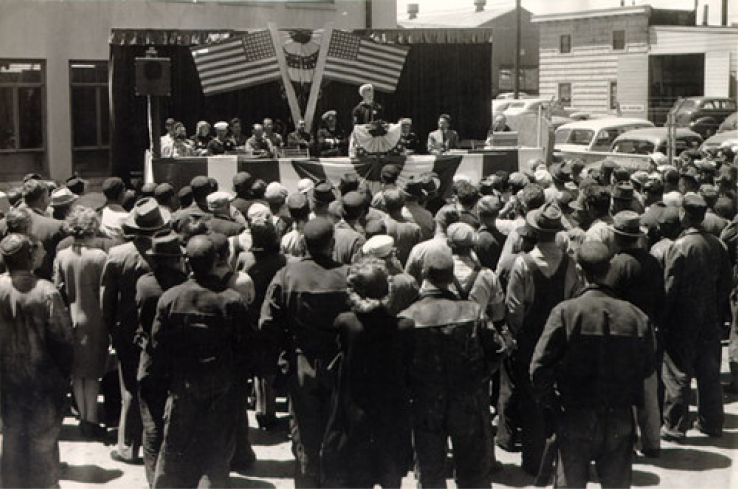
Soule celebrates its 50th anniversary with more than 1,600 employees across its steelmaking, rolling, fabrication, steel building, naval craft, and heavy equipment divisions. New offices open in Santa Ana, Ventura, and Chicago.
1963
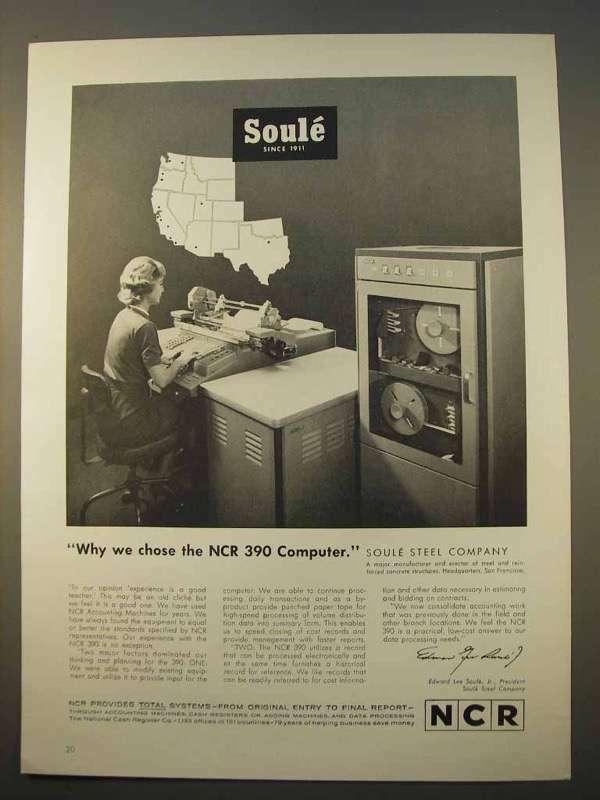
Soule introduces its first payroll computer, automating plant and field payroll calculations that had previously been performed by hand. The new system improves efficiency and marks one of the company's earliest steps toward the use of computerized business processes.
1971
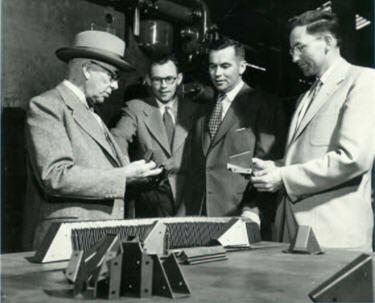
On January 7, 1971, Edward L. Soule passes away at his home in the Berkeley Hills after leading Soule Steel for six decades. Having played key roles in the business for years, his three sons Lee, Stanley, and Howard assume leadership to continue the company's legacy.
1973
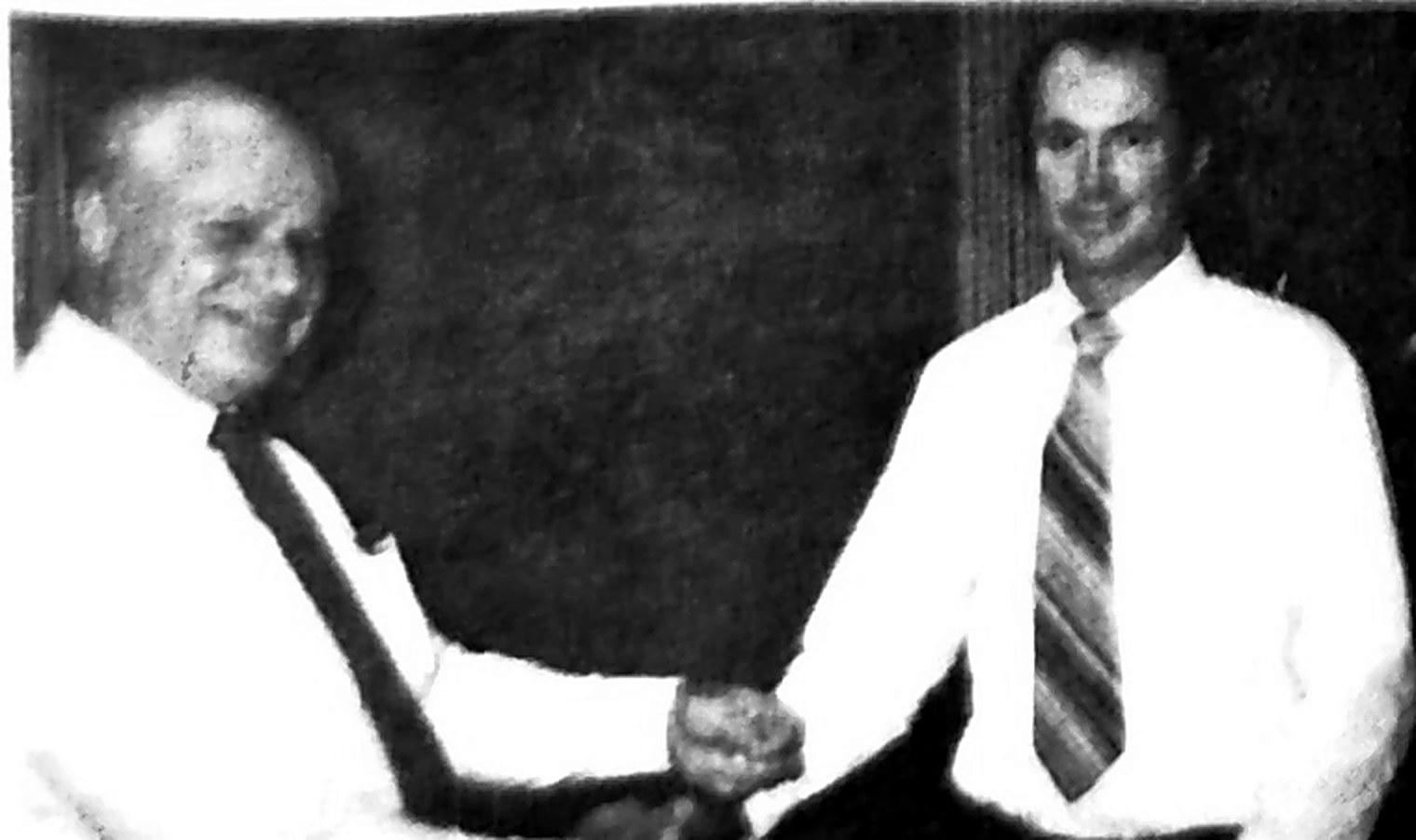
A third generation joins the mill. Stanley E. "Sandy" Soulé Jr., grandson of founder Edward L. Soulé, joins Soulé Steel as assistant to the Steel Mill Manager. A graduate of UC Santa Barbara, Sandy held bachelor's and master's degrees in electrical engineering and served 4½ years in U.S. Air Force Systems Acquisition before leaving with the rank of Captain.
1978
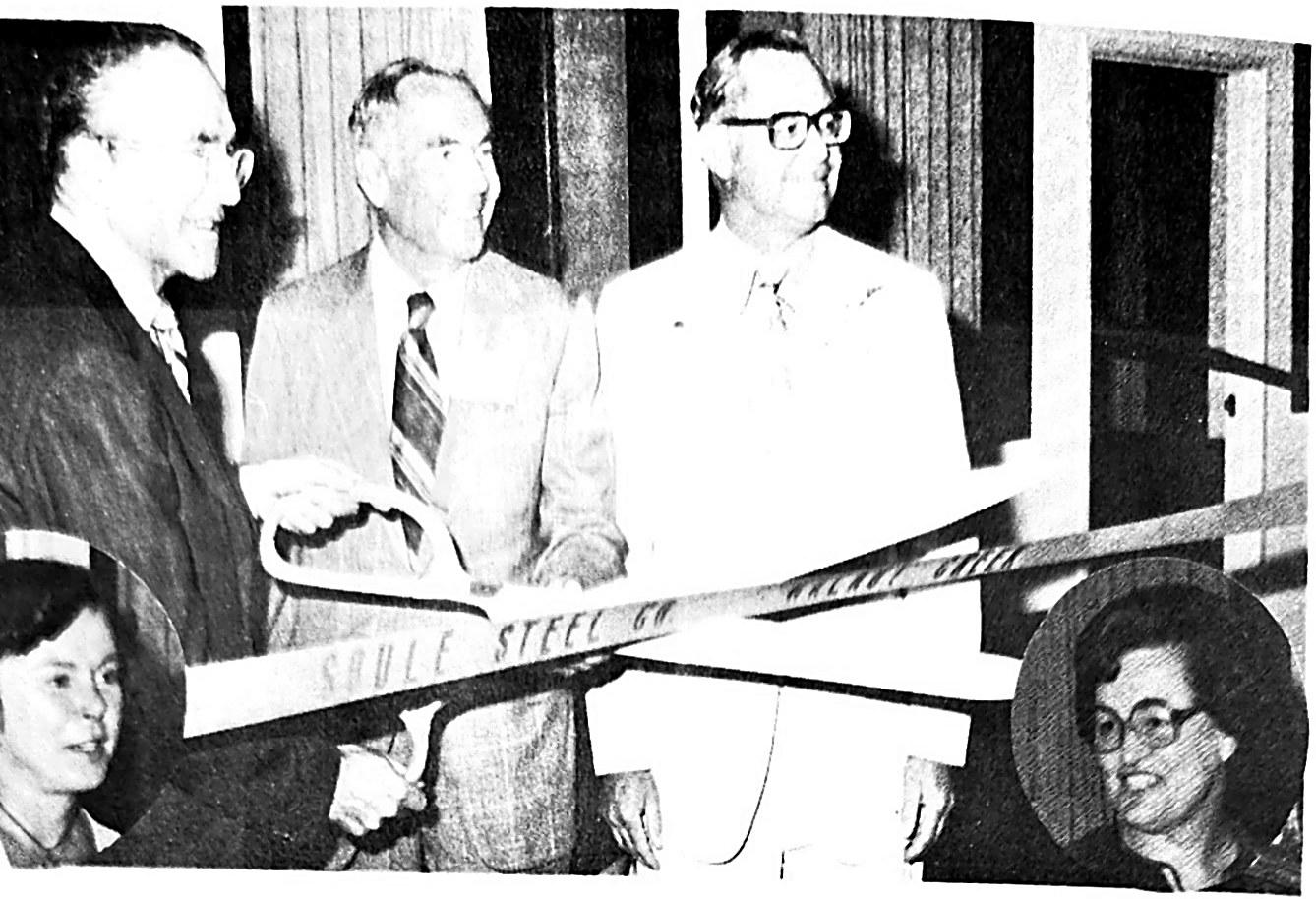
After 67 years in San Francisco, including 54 years at its Army Street location, Soulé Steel relocates its corporate headquarters to the Lowell Berry Building in Walnut Creek.
1980s
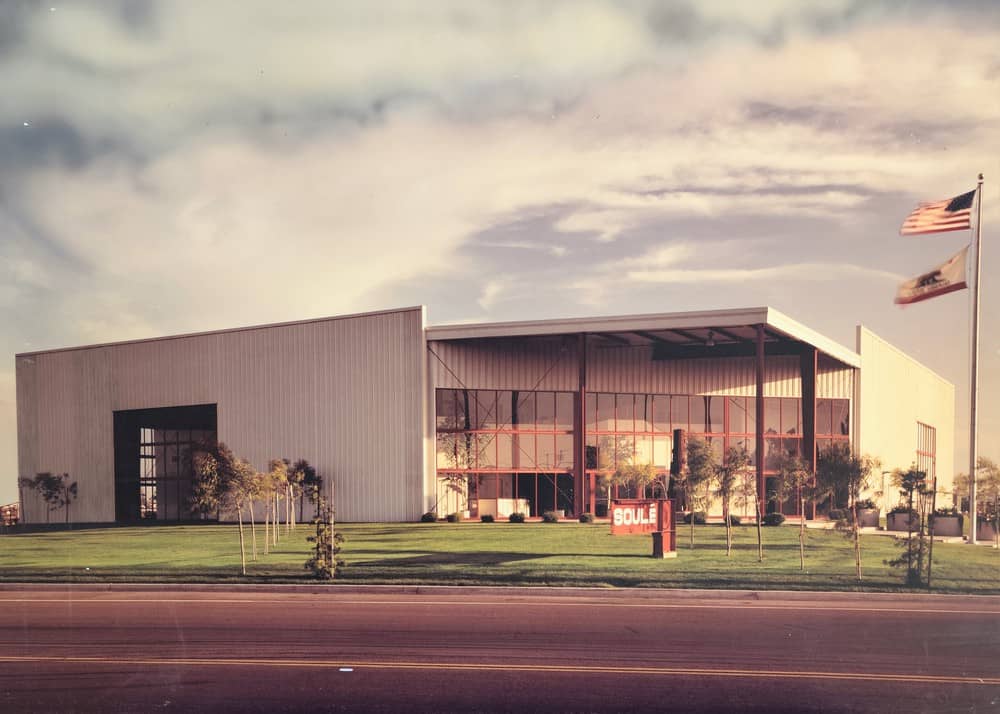
The early 1980s brought new challenges for Soulé Steel. Rising production and electricity costs placed increasing pressure on the Carson mini-mill, while foreign competition added to the difficulties facing American steelmakers. Soulé continued to win major contracts and invest in modern technology, but broader market forces were shifting against domestic producers.
1982
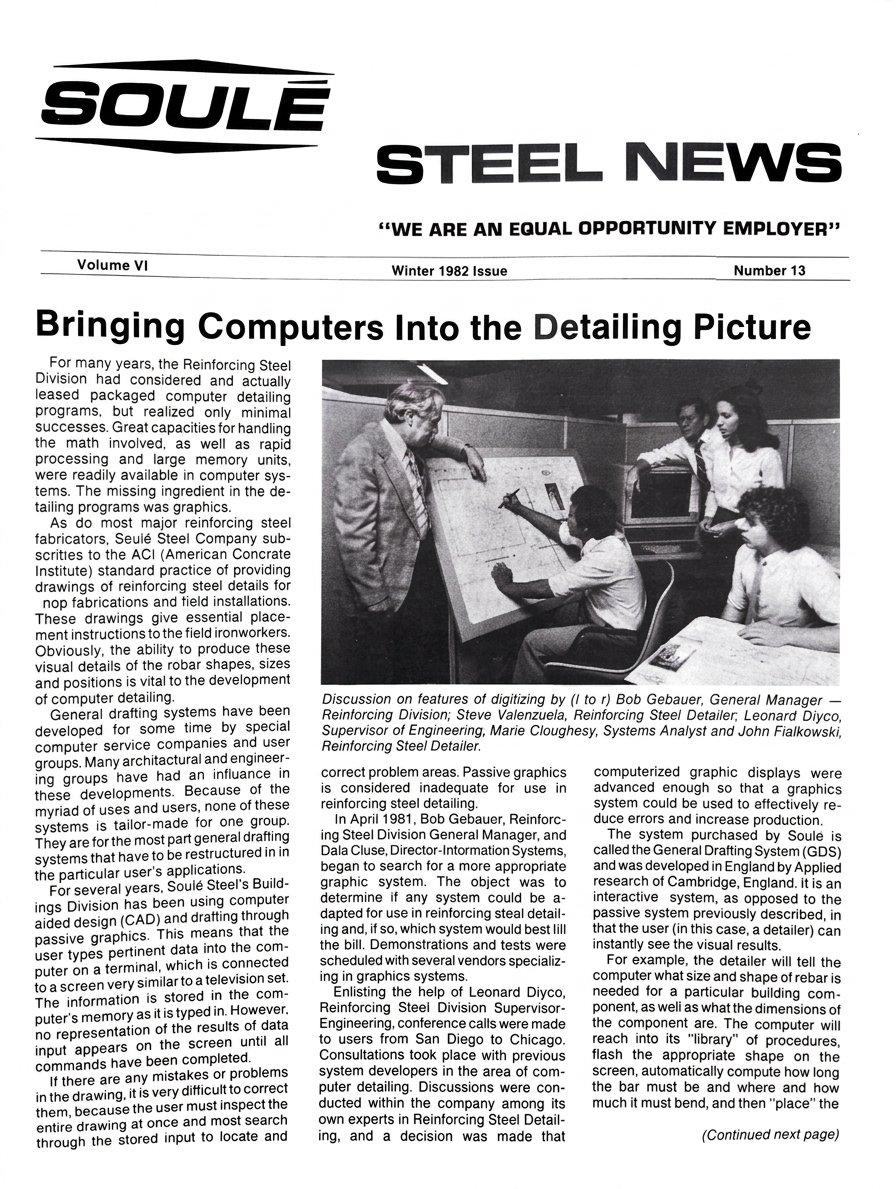
Soulé brings computer graphics into reinforcing steel detailing with the introduction of the General Drafting System (GDS) at its Carson Operations Center. The system allows detailers to review and correct drawings as they develop, while automatically calculating bar lengths and bends.
1984
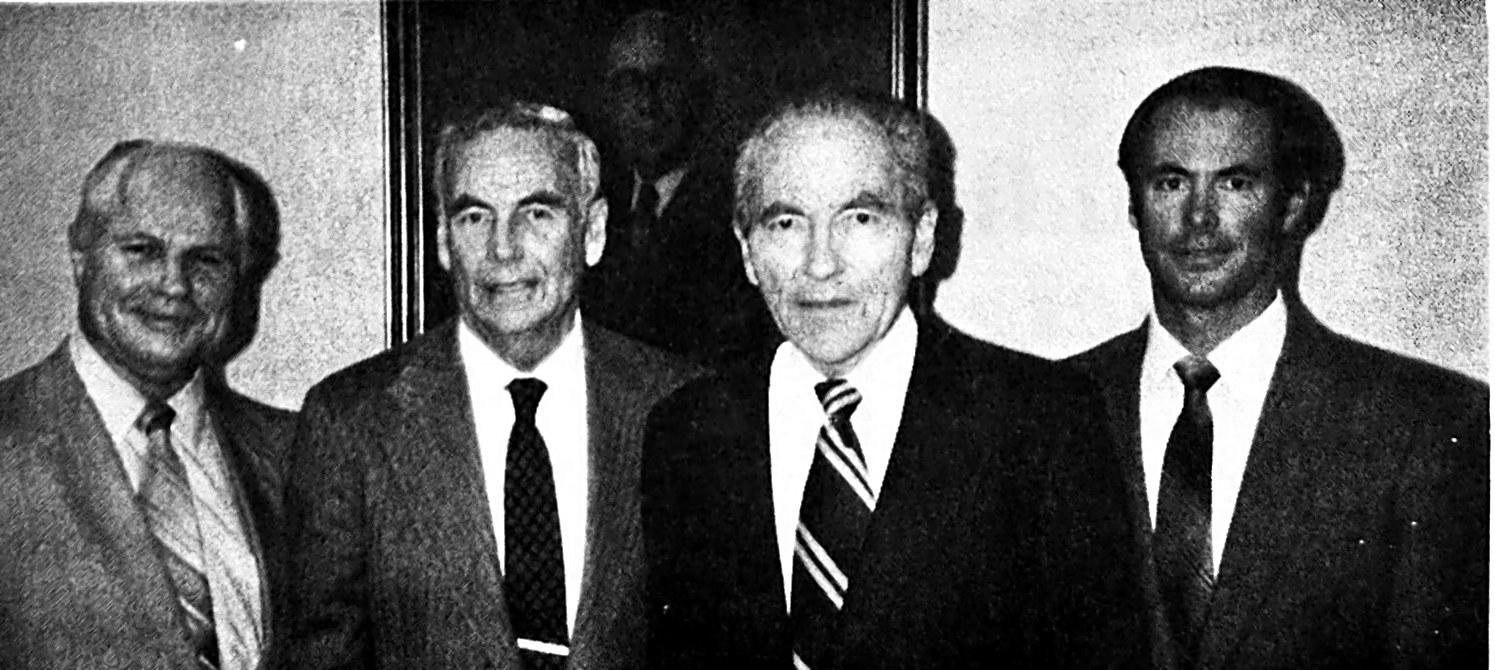
Lee Soulé retires as Chairman of the Board after 44 years with the company. His brother, Stanley Soulé Sr., succeeds him as Chairman and remains Chief Executive Officer, while Sandy Soulé is promoted to Vice President of Marketing and Operations.
1985
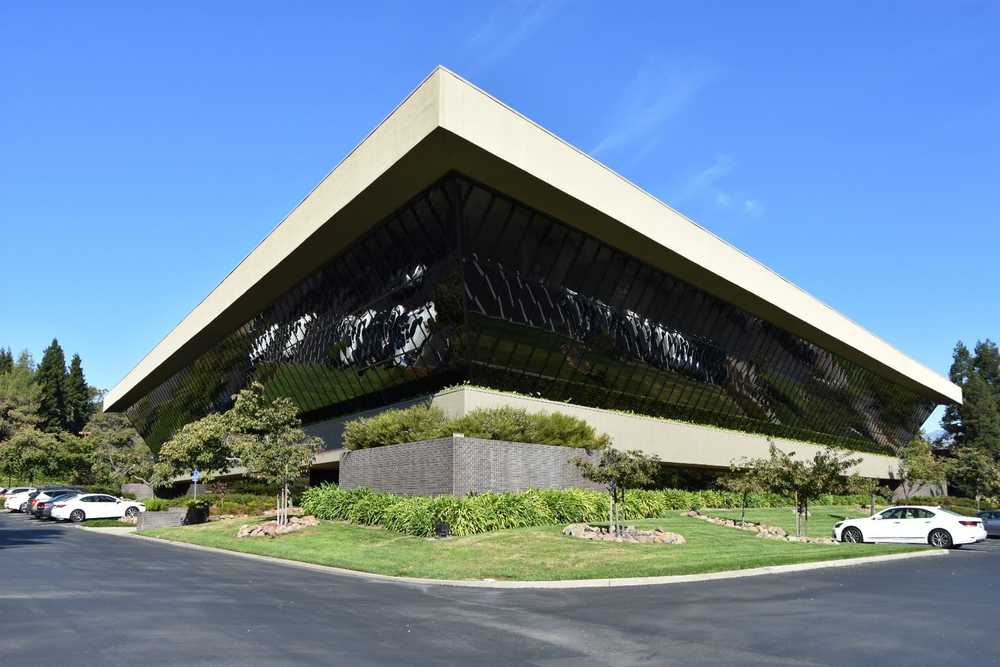
On April 16, Soulé Steel closes its doors after nearly 74 years in business. Over the next two years, the company works to liquidate its remaining assets and help longtime employees find positions with other steel firms. Meanwhile, Stanley E. "Sandy" Soulé Jr. opens a new chapter by incorporating Soulé Teleprocessing Corporation just north of Silicon Valley, installing a VAX computer and writing rebar software from scratch.
1986 to 1994
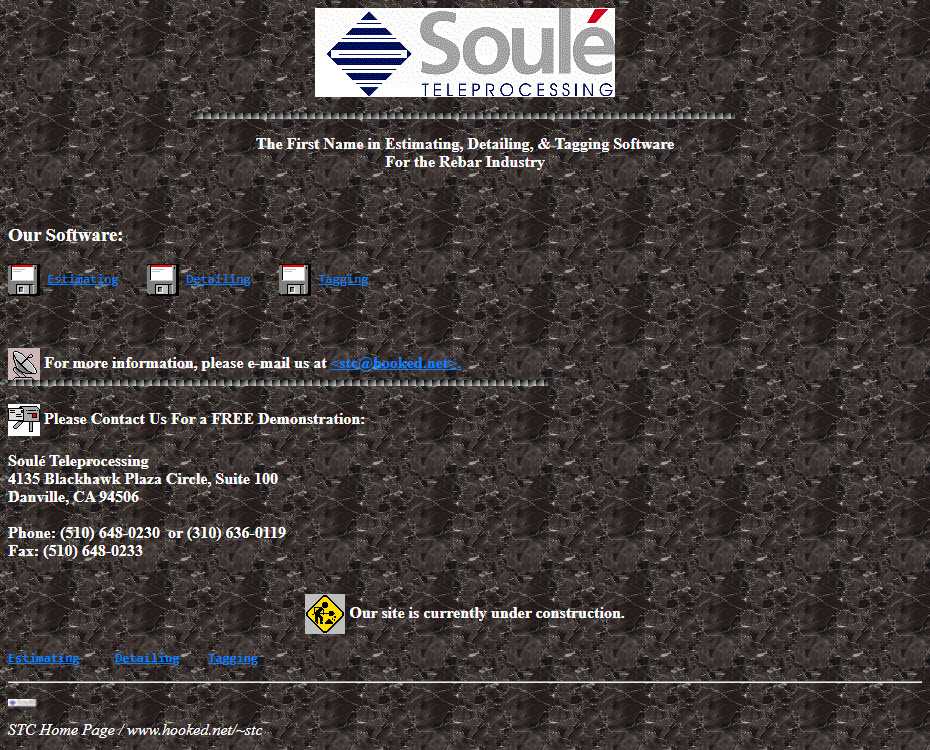
Soulé Teleprocessing releases standalone Estimating, Detailing, and Tagging modules designed specifically for rebar production. Originally developed for MS-DOS, the software is later rewritten for Microsoft Windows 3.1 as personal computers become standard tools throughout the industry.
1995 to 1996
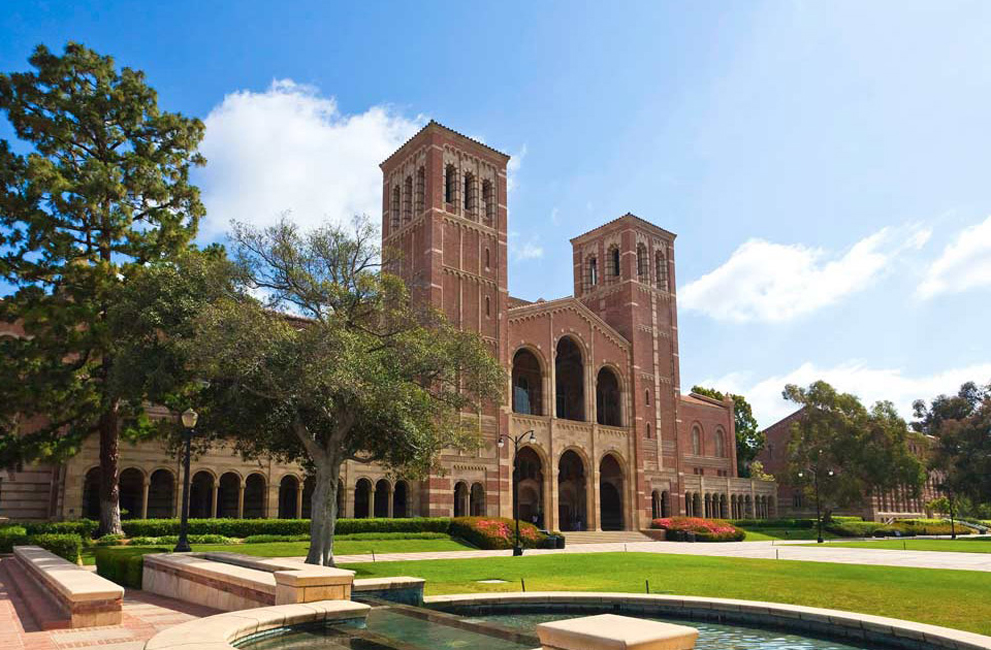
Sandy's son Kevin graduates from UCLA with an undergraduate degree in engineering and begins working full-time at Soule Teleprocessing in January 1996.
1999
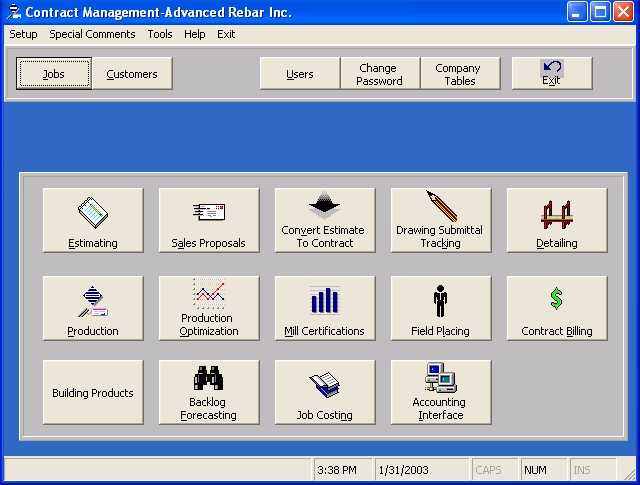
Soulé unveils Contract Management, merging Estimating, contract administration, Contract Billing, and Job Costing together into a single shared database. Built to support multiple locations and divisions at the same time, the system covers every project from bid through completion.
1999
Soulé Teleprocessing renames to Soulé Software, reflecting the company's move from mainframe computing over dedicated telephone lines to Windows desktop and server-based solutions.
2003
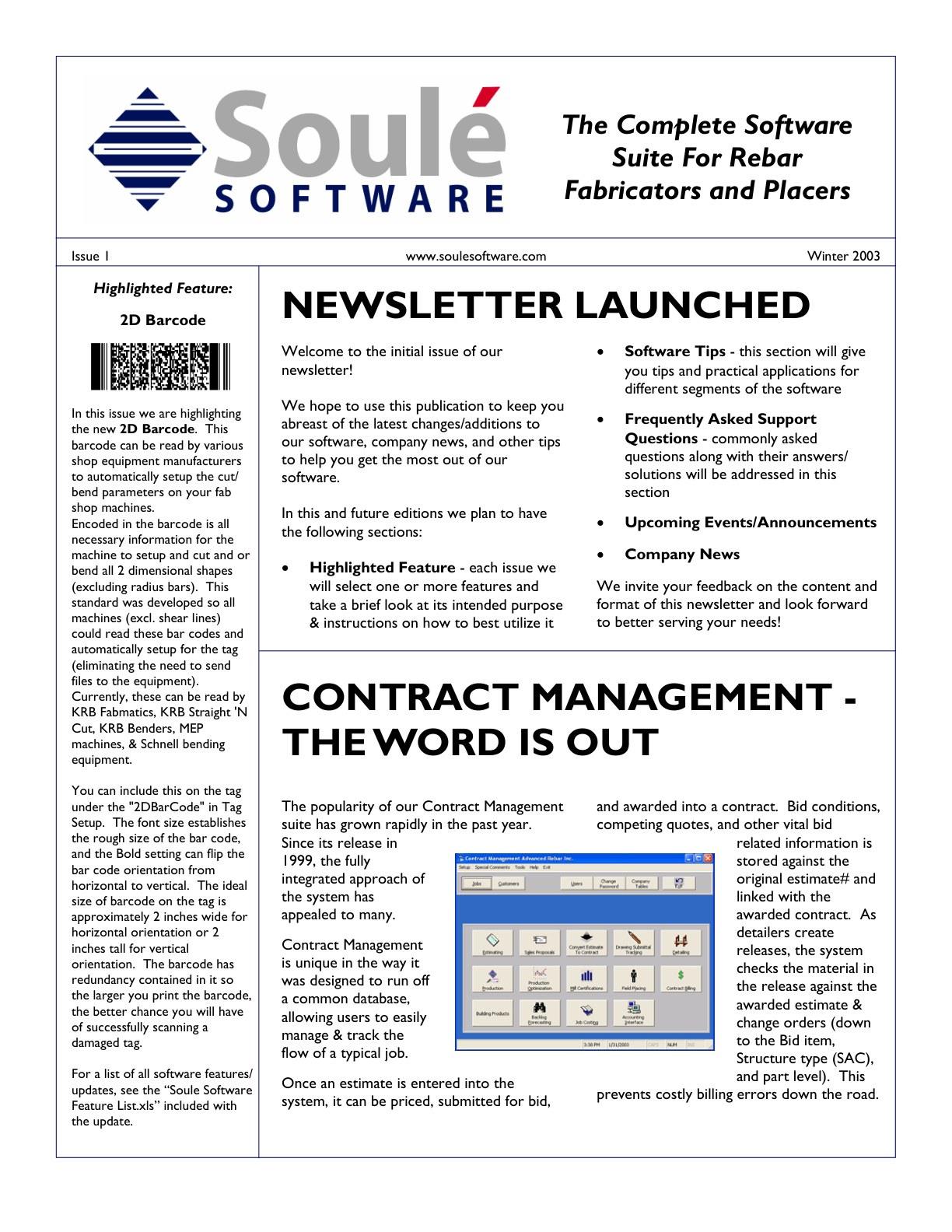
Soulé Software launches its customer newsletter and introduces the 2D Barcode to the fabrication floor. By encoding cutting and bending instructions directly on each release tag, the barcode allows shop equipment from KRB, MEP, Schnell, and other manufacturers to read the information and streamline machine setup.
2005
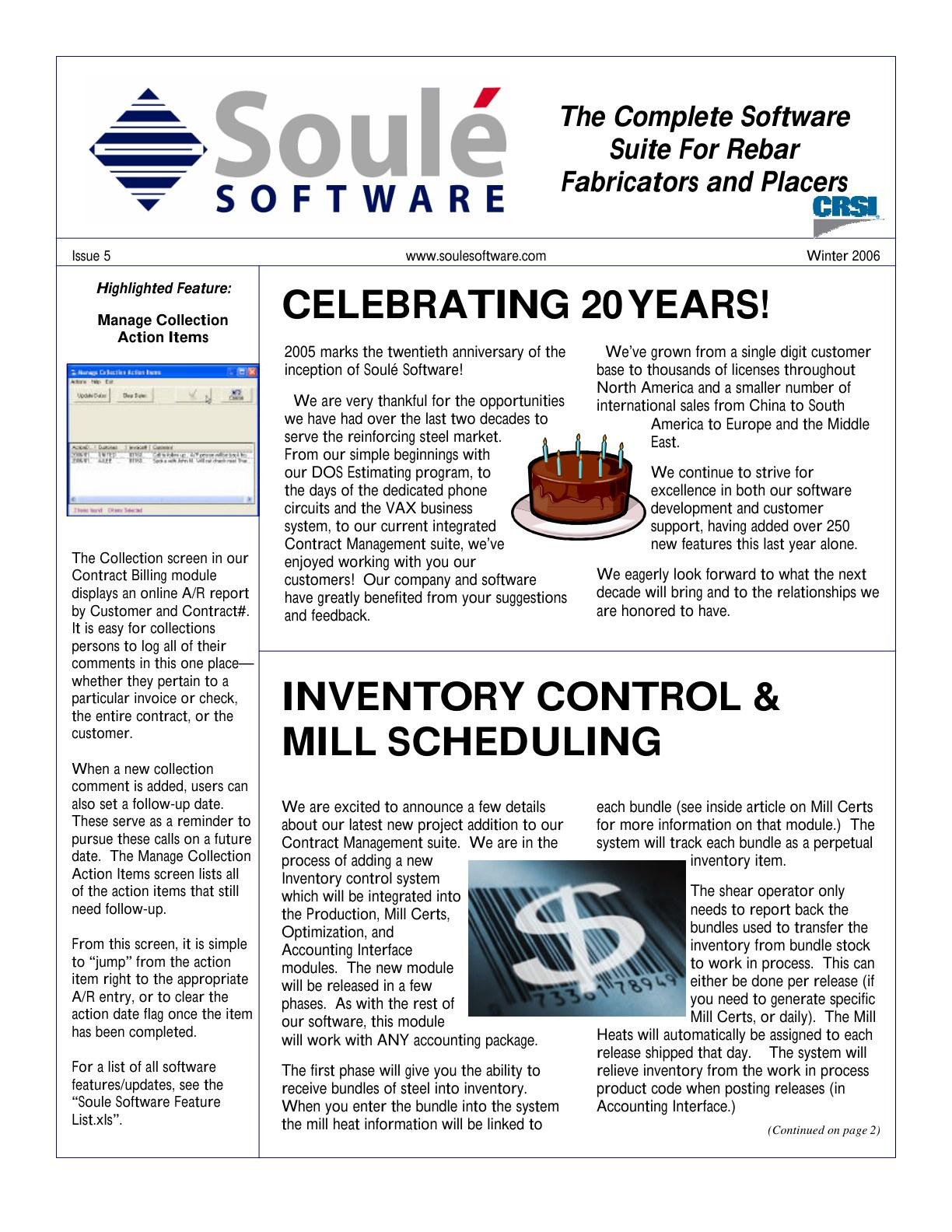
Soule Software marks its twentieth anniversary, having grown from a handful of early adopters to thousands of users across the United States, Canada, and international markets. The company ships over 200 features a year, including a new Accounting Interface to track costs across Shipments, Inventory, Invoices, and Freight.
2007
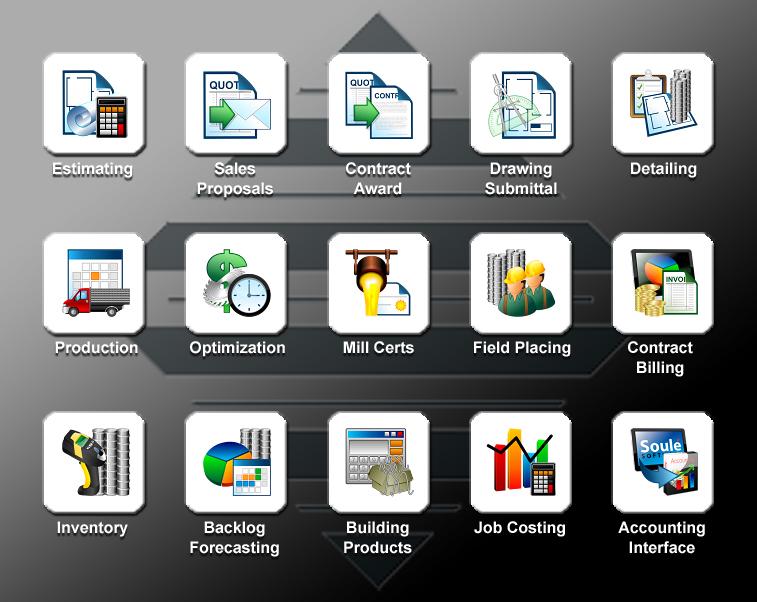
Soulé Software releases Inventory and Purchasing, connecting material management with Production, Mill Certs, Optimization, and the Accounting Interface. Fabricators can receive steel by bundle, maintain perpetual inventory, link mill heat information to each bundle, and automatically assign heats to releases as material moves through production.
2012
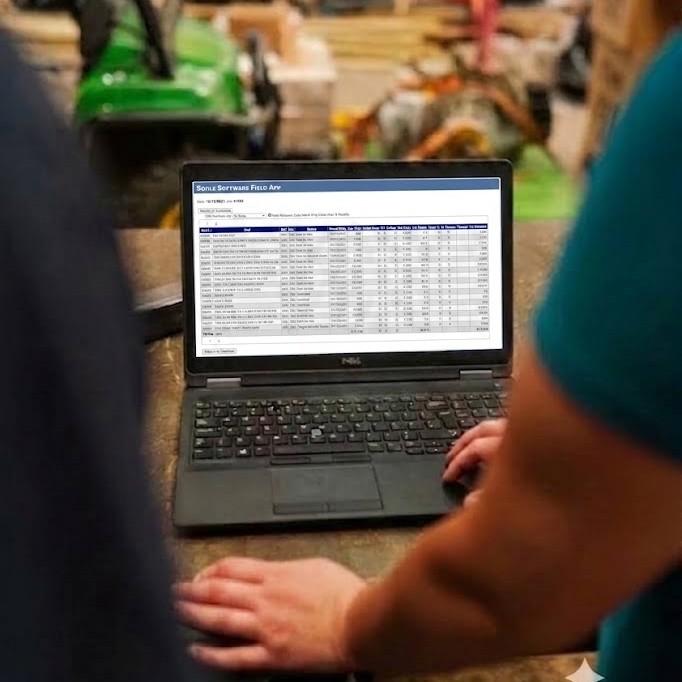
The Field App brings rebar tracking to the jobsite. Foremen log placements, confirm release deliveries, and record labor by SAC Code from a mobile device, giving the office real-time visibility into placement rate and timecard hours.
2018
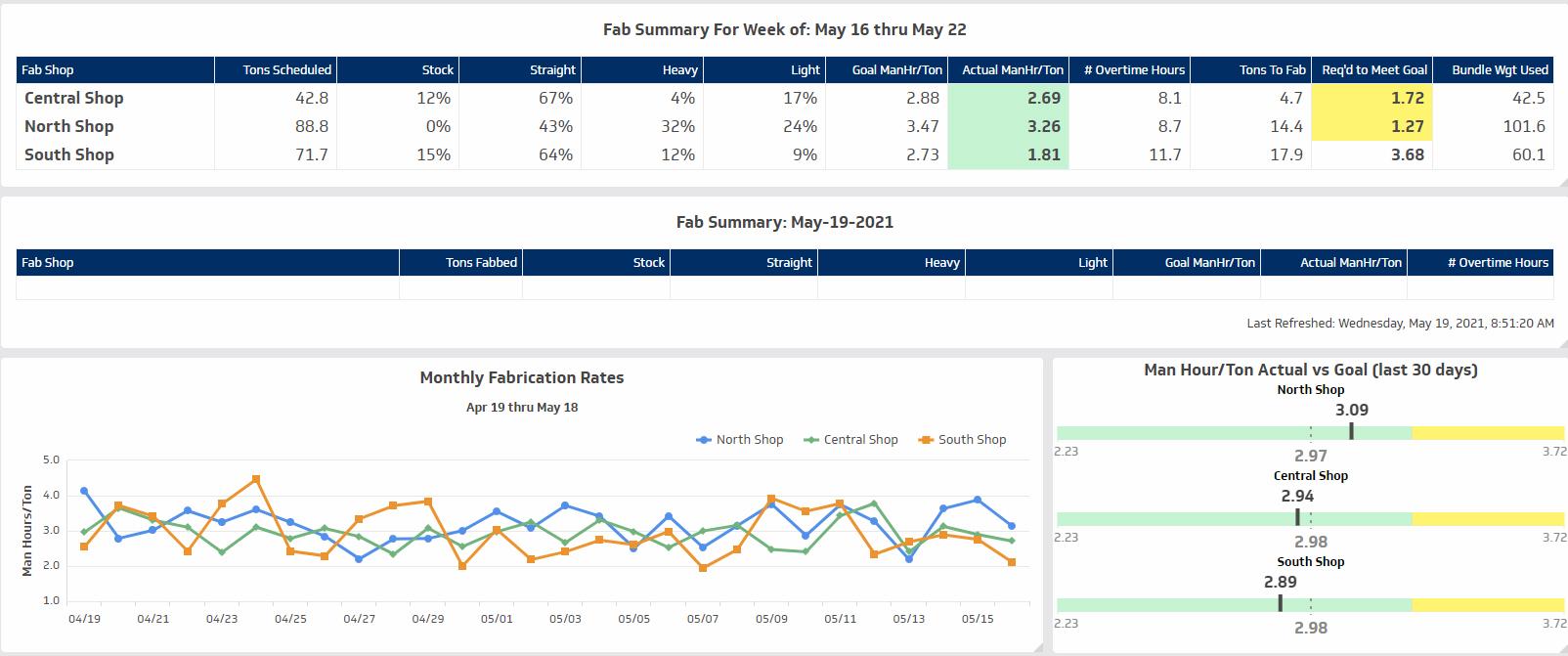
Soulé Software launches the industry's first web-based customer portal for rebar fabricators. Customers can check job status, review delivery records, and access invoices from any browser, reducing inbound calls and keeping every project stakeholder aligned.
2021
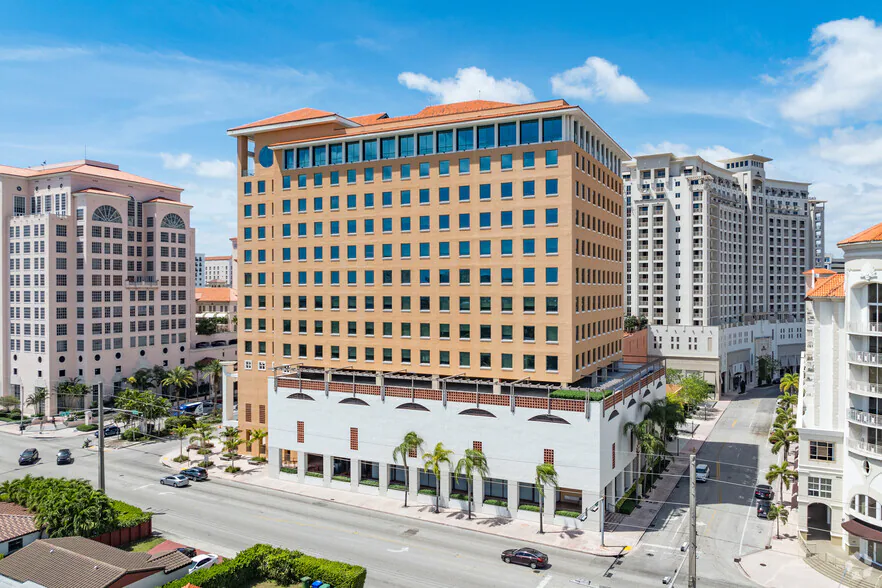
Soule Software opens an East Coast office and welcomes Rodger Look to the team. With 30 years of experience running rebar fabrication and placing divisions, Rodger brings deep industry knowledge to support Soule's growing customer base.
2022
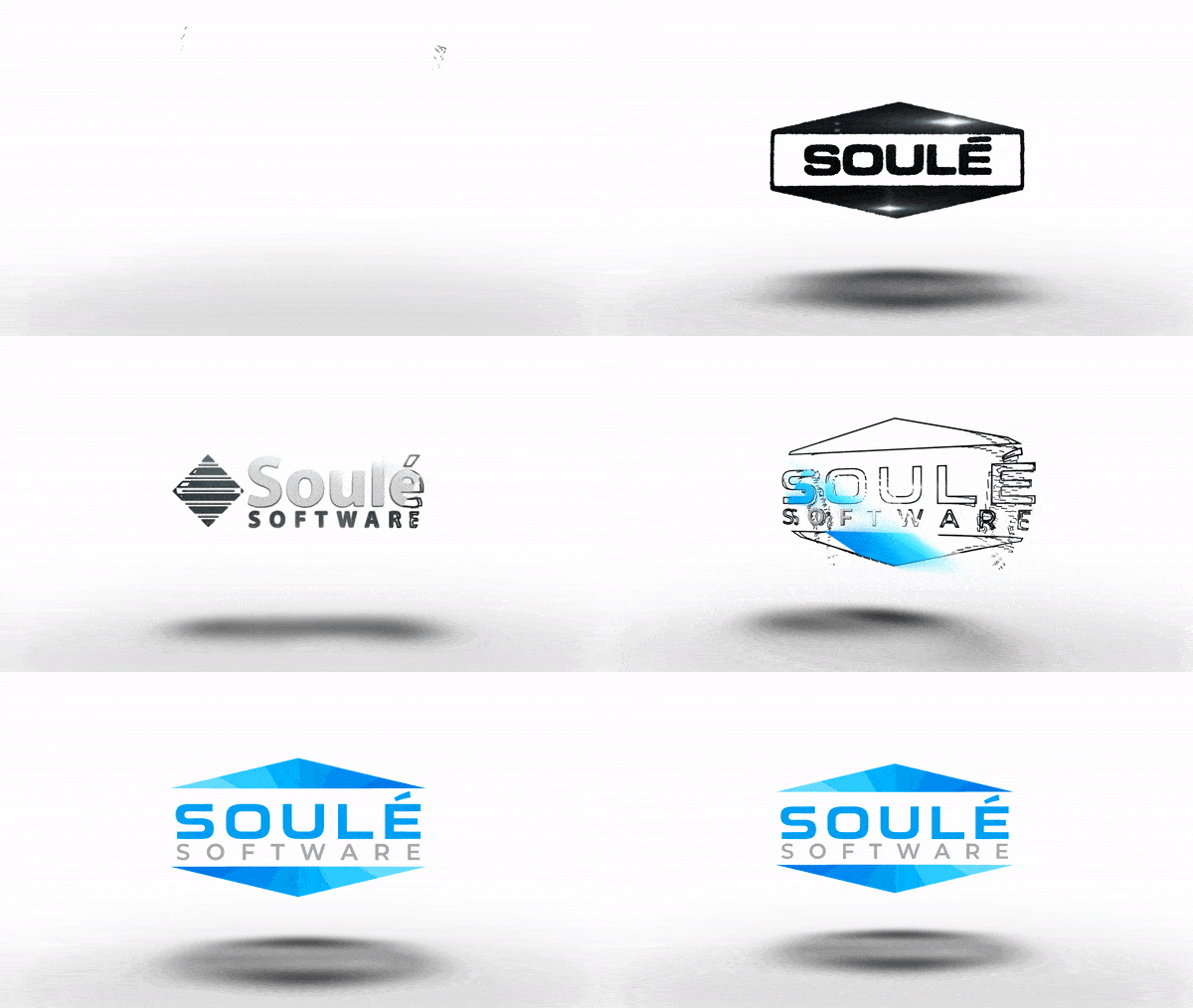
Soule Software adopts a new logo, drawing inspiration from its heritage in the Soulé Steel Company.
2023
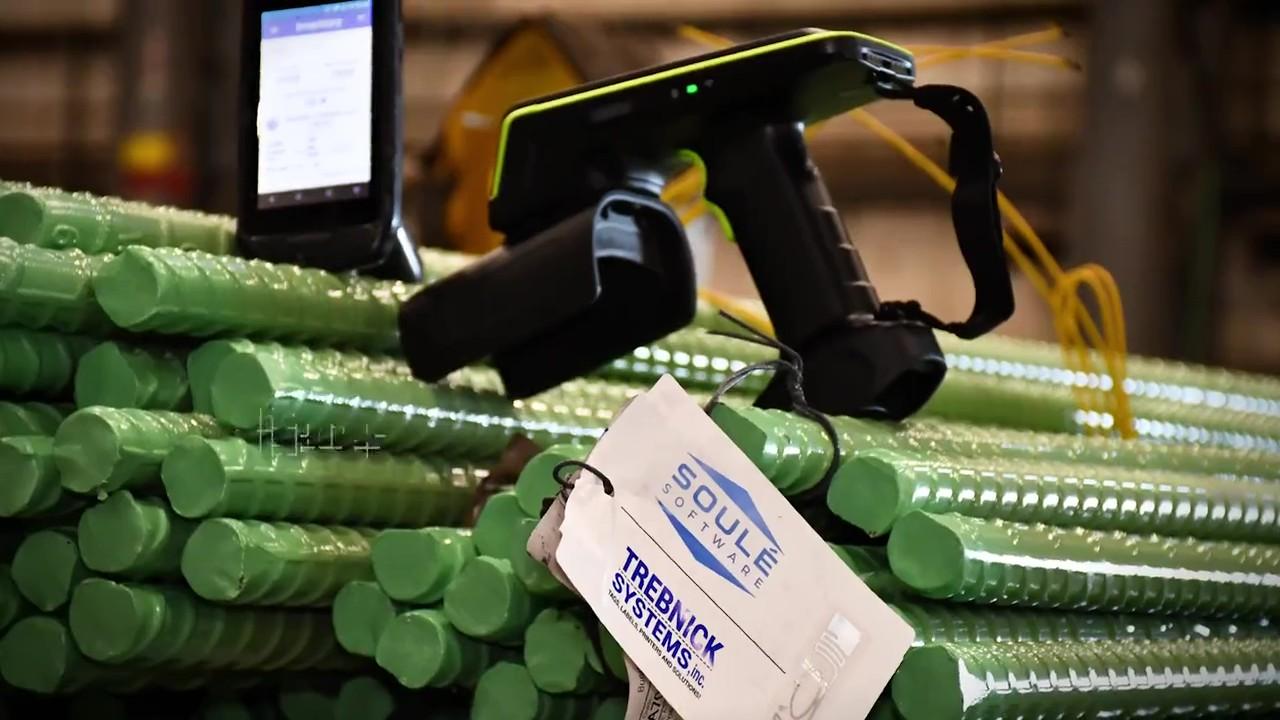
Soulé Software releases RFID bundle tracking to make inventory counts faster and more accurate. Proof of Delivery moves delivery confirmation to the jobsite, replacing paper-based bills of lading with a digital record of each delivery.
2024
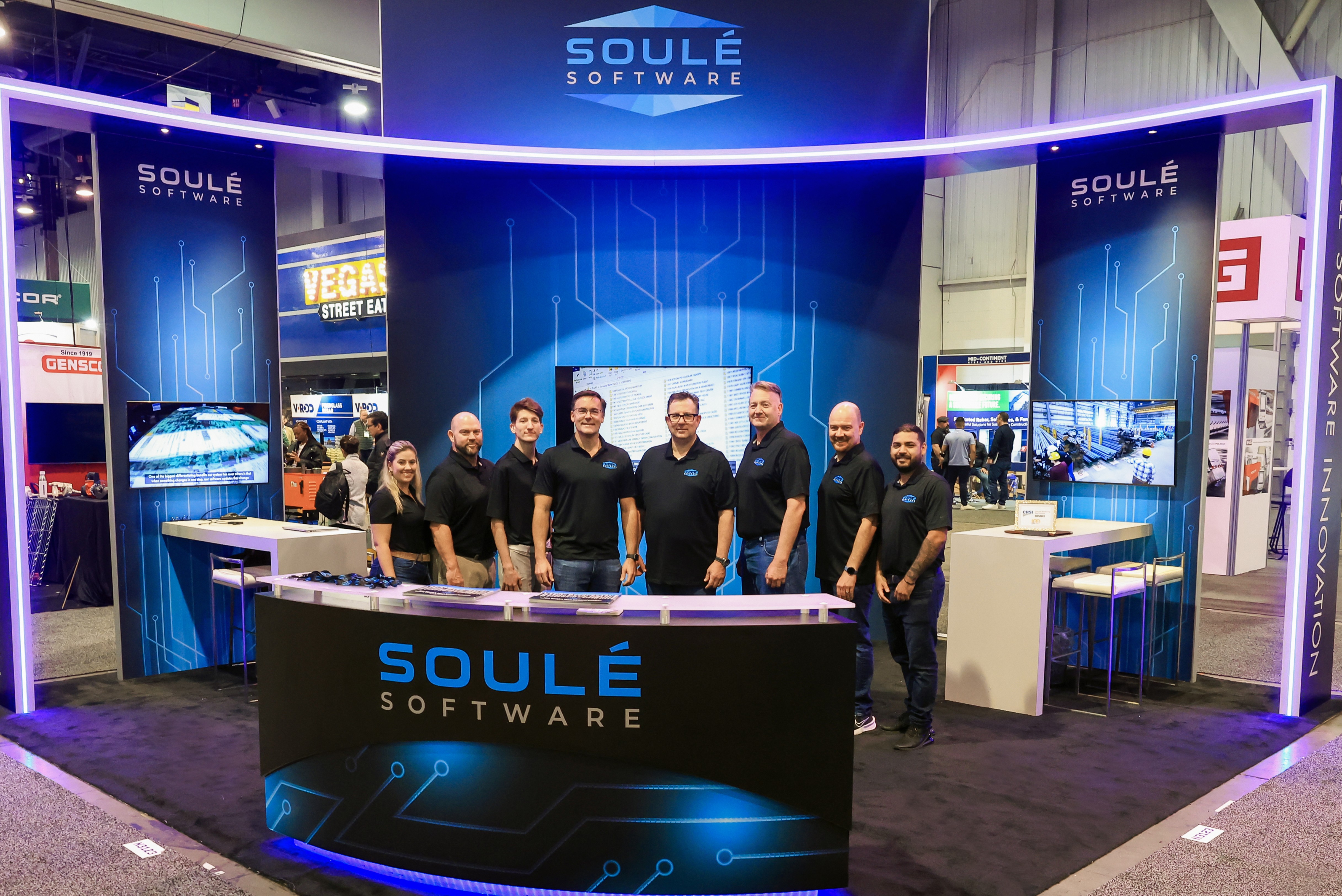
Soule Software expands its operational and support presence worldwide, hiring talent and opening offices in Las Vegas and India.
2025
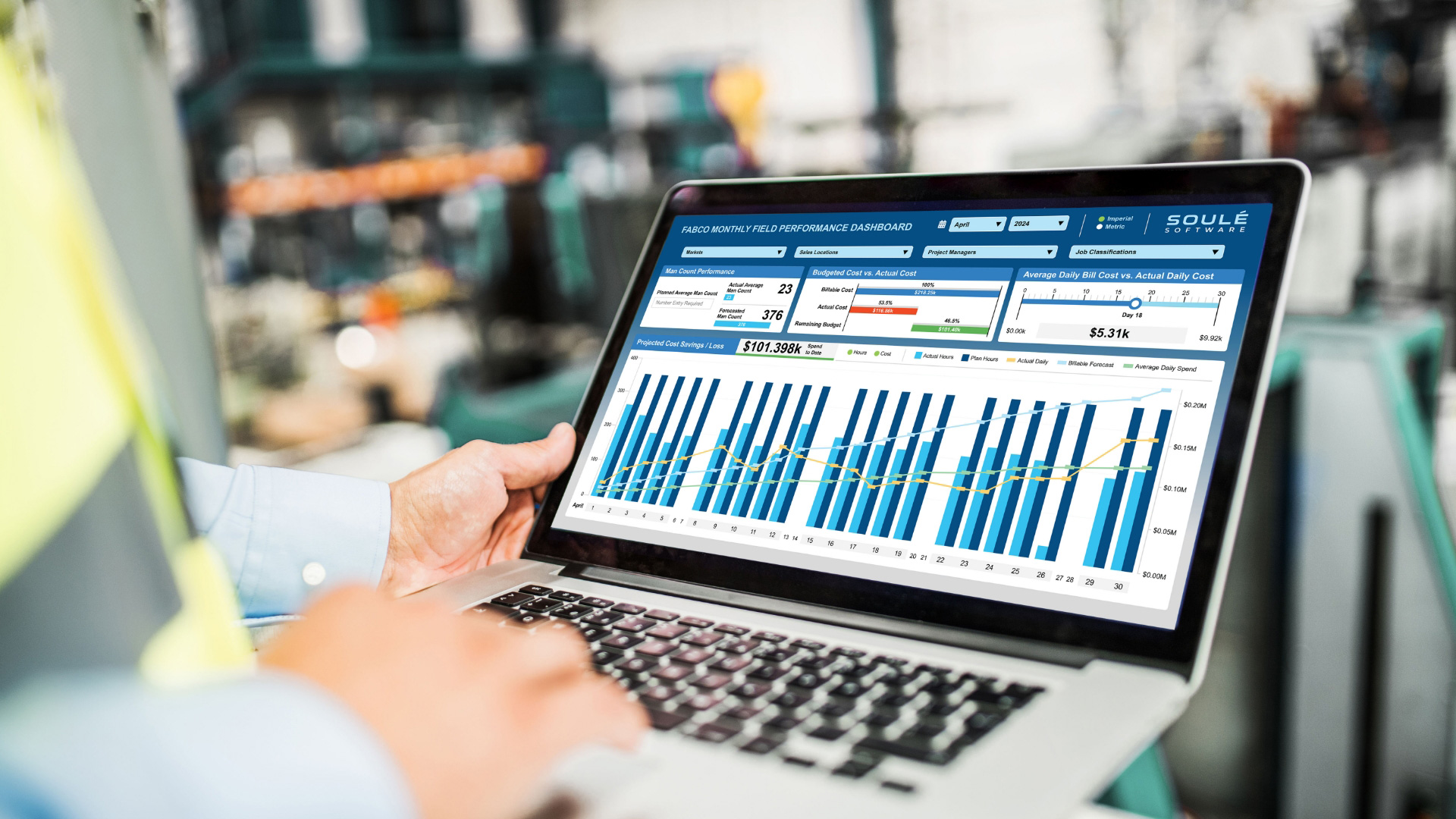
Soule Software introduces Power BI Dashboards, giving fabricators and placers direct access to real-time production, delivery, inventory, backlog, and financial data.
2026
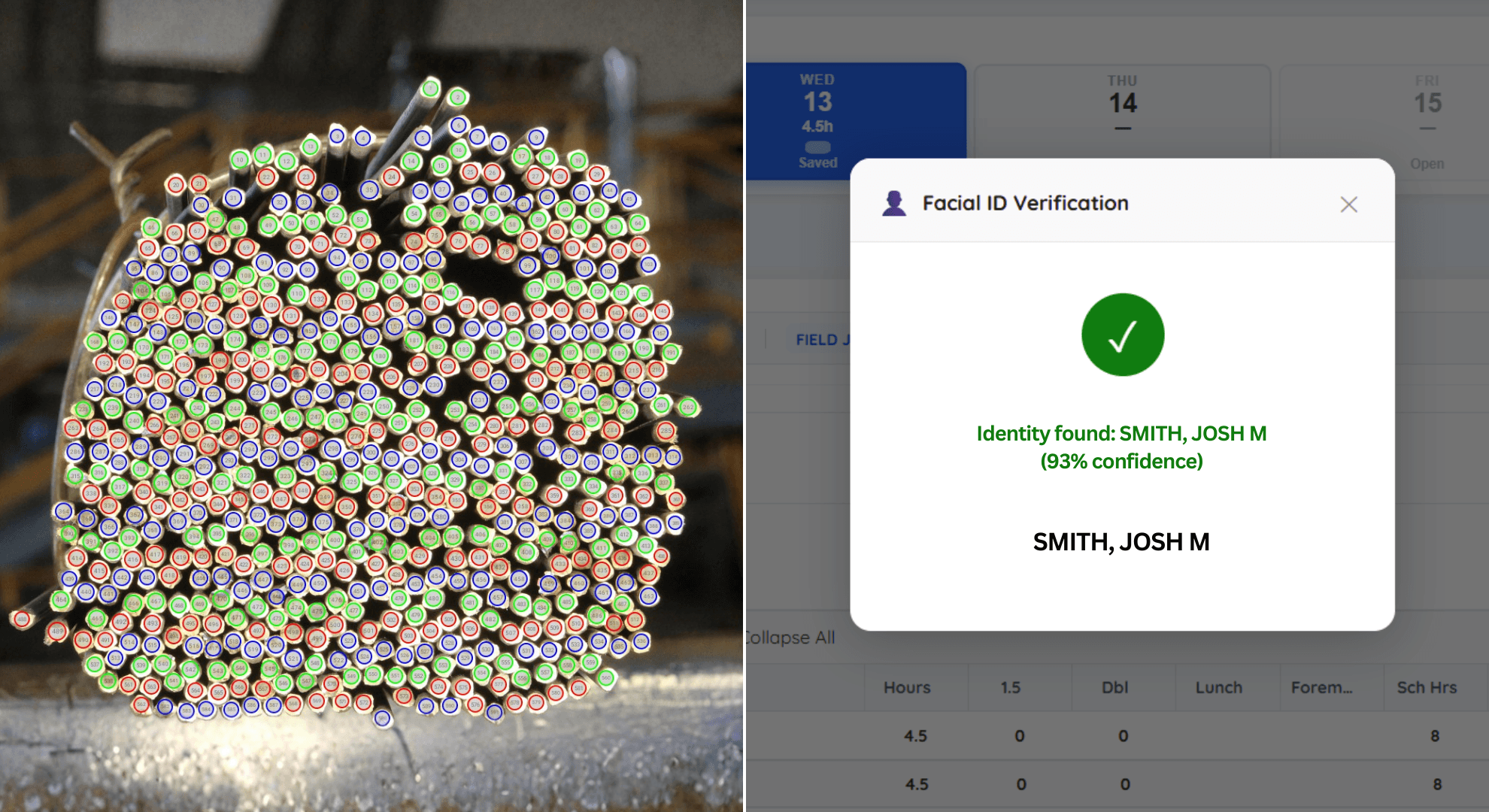
Soulé Software introduces Remnant Tracking, allowing fabricators to scan bundle ends and return usable remnants to Inventory. The Field App adds biometric verification to confirm ironworker attendance and resolve timecard disputes.